La Oficina México: tone as craft decision.
We shot the campaign and launch stills of La Oficina México with Amazon Prime Video and Ignition Creative. It wasn't a promotional piece — it was the advertising extension of a universe just being born. Notes from a set where tone was guarded in every glance.
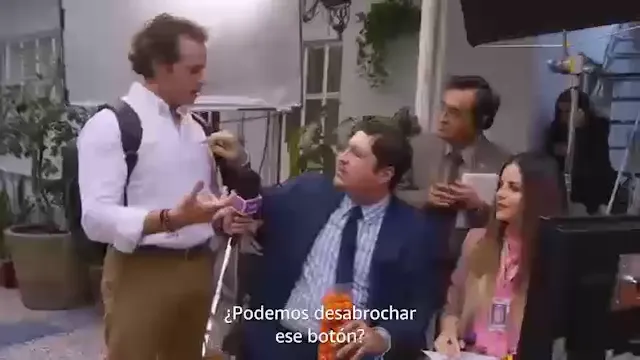
Working with Jerónimo Ponce III was quite an experience. Not necessarily in the good sense. That line, which ended up being one of the anchors the campaign launched with on social, says more about the project than it seems. Because for a character to work so well that people recognize the boss everyone dislikes, he first has to be well built. And that doesn't happen in the script alone. It happens when the whole ecosystem around the character — the camera, the light, the set, the scene partners — understands how he breathes.
Some projects get launched. Others get put on trial. La Oficina México belonged to the second group before it even existed. When a Mexican adaptation of The Office was announced, the conversation started loaded. Not because the audience doubted the production, but because The Office, in any of its versions, is not just another show. It's a genre in itself. A way of looking at the everyday. A code the whole world recognizes. Adapting it is the closest thing there is to a public test of craft.
✦"Tone here isn't directed obviously. It isn't pushed. It's guarded."✦
And from the inside, what surprised us most was exactly that: the level of precision required by something that looks so simple on screen. An awkward silence is not just any silence. A look at the camera is not just a look. Every detail weighs double when the format is mockumentary.
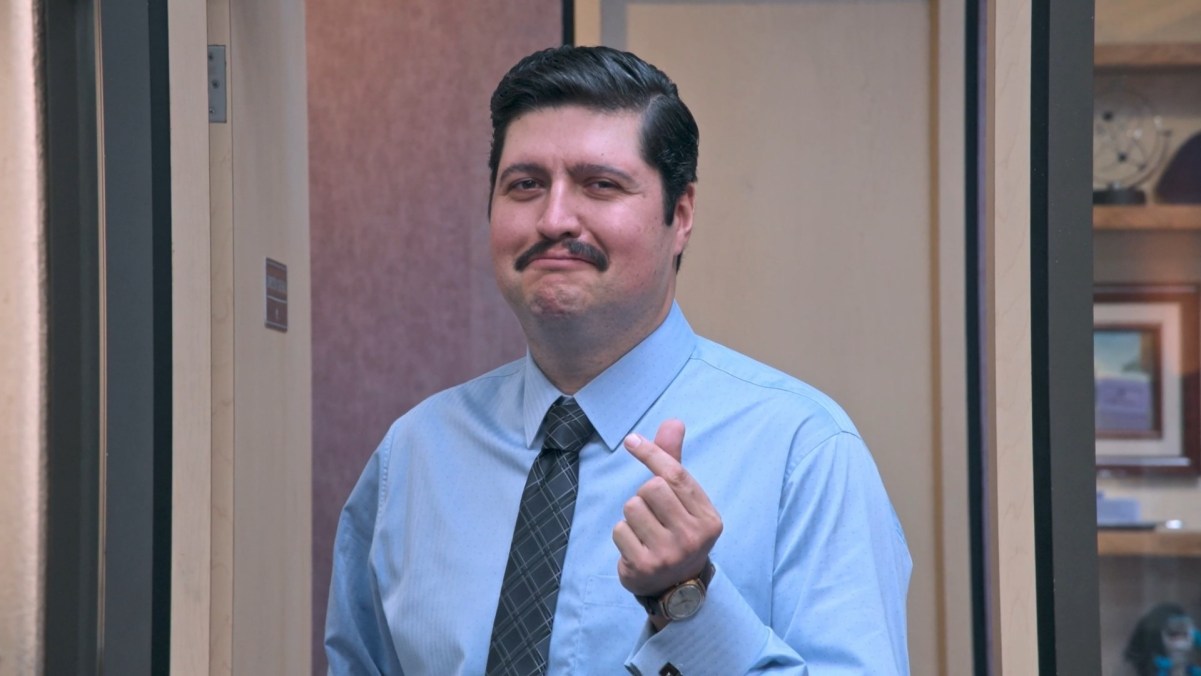
It's worth remembering where the series came from. It premiered on March 13, 2026 on Prime Video, with eight episodes available from day one across Latin America, Brazil and Spain. It's directed and produced by Gaz Alazraki (Club de Cuervos, Nosotros los nobles) with Marcos Bucay as showrunner. Fernando Bonilla stars as Jerónimo Ponce III, regional manager of Jabones Olimpo, a family-owned company from Aguascalientes.
CNN and Proceso reported what many already sensed a few weeks after the premiere: Prime Video renewed the series for a second season. Variety picked up the key statement from Javiera Balmaceda, head of Amazon MGM Studios originals for Latin America, acknowledging that La Oficina became Prime Video's most-watched local title. Milenio covered it before launch. Excélsior measured the success in numbers. Peru's El Comercio ran the first interviews with Bonilla, and Edgar Villa spoke with Sopitas. That kind of sustained coverage, for weeks, is what tells you a series worked.
The campaign was conceived as an extension of the series, not as an ad. We shot the advertising campaign and the launch photography with Amazon Prime Video and Ignition Creative. The main question from the very first meeting wasn't how to sell the series. It was how not to break it. Because when you produce promotional material for a show with such a specific tone, you have two paths: treat the pieces as standalone ads, or treat them as extensions of the universe. The first is faster. The second is the only one that works.
The campaign was led by Marcos Bucay, the show's showrunner, together with Raga Ibarra. That combination was key: Bucay carried the project's narrative DNA from within; Raga brought the craft of the commercial understood as cinema. We decided to produce every piece with the same level of cinematic craft an episode would have. Direction, cinematography, art, editing, color and sound conceived from the mockumentary, not from the commercial. Even the seasonal activations, like the special Valentine's Day piece, were conceived as extensions of the universe.
The shoot took us to Estadio Akron. There was one day I remember clearly: shooting with Jerónimo at Estadio Akron, home of Chivas. One of those days where everything has to align to the millimeter. The space, the energy, the rhythm, the timing. But beyond logistics, there was something more important to sustain: the tone. We also worked with Diego Schoening on moments that had to feel completely organic. That kind of naturalness doesn't happen by accident. It's the result of many small decisions accumulating until the whole feels coherent. Cinematography was led by Manuel Verde, Amoy Paz and Mr. HCE, spread across the different units.
As almost always with launches like this, producing one piece meant producing many. The campaign wasn't a single delivery. It was a complete system: hero films, broadcast pieces, native digital content, launch stills, BTS, social assets, one-off activations, materials for strategic partners. We operate more like an organism than an org chart. When clips from the series started going viral and fans demanded continuity, Fernando Bonilla himself used his social channels to mobilize the audience, and that organic response was one of the factors that accelerated the second-season confirmation. TV Azteca and practically every outlet in the country covered it.
There was also a lot of pipeline behind it. A campaign that lives in streaming, on social, in physical activations and in editorial formats demands versioning and post workflows very different from the traditional commercial. At Selva Lab we've built our own pipeline, previsualization and generative-AI tools applied to mass versioning and visual concepting. Post was handled by Kibal Studio, with whom we kept an integrated workflow from the shoot onward. Technology gets used, not announced.
Critics reacted too. Vogue México praised the decision to cast new or little-known actors, comparing it to Ricky Gervais's original bet. El País reported the second-season confirmation as a cultural data point. AS México, Récord and El Informador amplified the audience's organic demand. The series has its own entry on Wikipedia, second season already confirmed, and Prime Video presented it at CCXP México 2025 as an anchor of its regional showcase.
Producing for a global platform from Mexico also demands responsibility. We operate with plastic-free sets, local vendors, a crew treated like people and a measured footprint. We're on the path to becoming the first Mexican advertising production company certified as a B Corp. Every project is the real test that the intention doesn't stay in the speech.
What remains is something very valuable in how La Oficina México manages to walk the thin line between honoring a legacy and building an identity of its own. It doesn't try to copy, but it never loses sight of what makes the universe work. That takes understanding, sensibility and a lot of precision. The campaign, in that sense, accompanies the spirit of the series. It doesn't explain it. It doesn't oversell it. It integrates. In an industry with ever more content, more platforms and more noise, what really makes the difference isn't how much gets produced. It's how authentic it feels. The full series is on Prime Video. And it's worth watching without prejudice. Working with Jerónimo Ponce III was quite an experience. Not necessarily in the good sense. But yes, exactly, in the right one.
Production credits. Client: Amazon Prime Video · Agency: Ignition Creative · Production company: Selva Studio. Locations: Mexico City, Estadio Akron (Chivas). Talent: Fernando Bonilla, Diego Schoening, Fabrizio Santini, Elena del Río, Edgar Villa. Direction: Marcos Bucay, Raga Ibarra. Executive Producer: Axel Torres. Cinematography: Manuel Verde, Amoy Paz, Mr. HCE. 1st AC: Rojo. 1st AD: Fer Garza. Production team: On Top MX. Stills: Conrado del Campo. Makeup: Renée Chiwoo. Wardrobe: Erika del Bull. Post-production: Kibal Studio.
Press coverage and related links. Where to watch: La Oficina on Prime Video. Project page: La Oficina on Wikipedia. Season 2 announcement: Variety · CNN en Español · Proceso · Récord. Launch coverage: Milenio · Excélsior · El Comercio (Peru) · TV Azteca · Eje Central. Official channels: @primevideomx on Instagram · Fernando Bonilla's reel.